Core Principles of Sports-Specific Training
1) Movement Specificity
Program drills that mirror your sport’s accelerations, decelerations, cuts, rotations, and jumps. Example: lateral shuffles + reactive cuts for tennis and basketball.
2) Energy System Match
Condition the dominant energy system: repeated sprints for soccer, alactic power bursts for tennis rallies, and mixed aerobic-anaerobic for cricket fielding.
3) Strength & Power
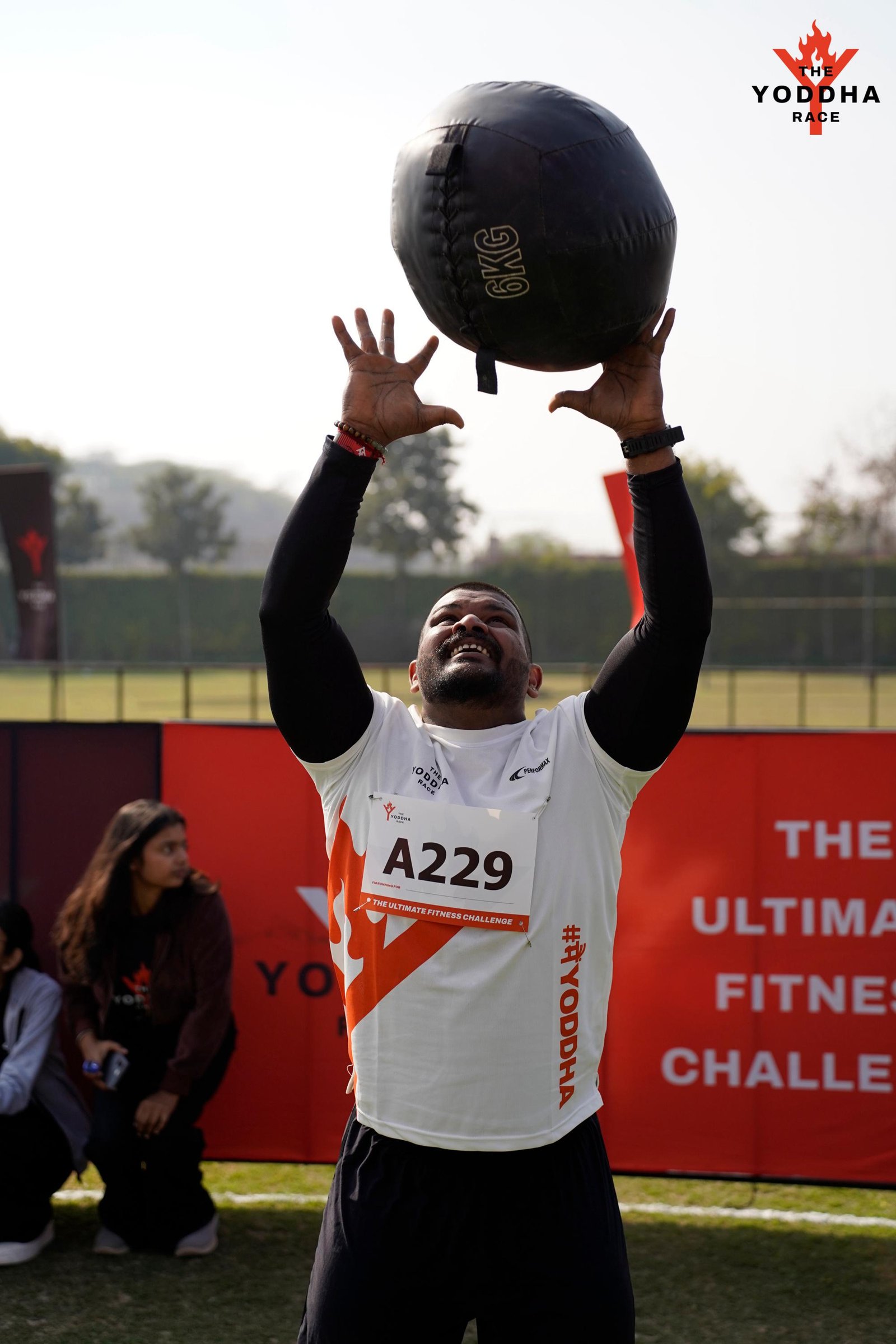
Use compound lifts for force, then convert to sport power with plyometrics and medicine-ball throws.
4) Mobility & Robustness
Mobility (hips, thoracic spine, ankles) plus tissue capacity (isometrics, eccentrics) lowers injury risk and improves efficiency.
5) Skill Integration
Finish sessions with skill-under-fatigue (e.g., shooting after sprints, batting after shuttle runs) for game realism.
Sport–Drill Matrix
| Sport | Key Qualities | Go-To Drills |
|---|---|---|
| Football (Soccer) | Acceleration, repeat sprint ability, change of direction, hip robustness | 10–30 m sprints, flying 20s, 5-10-5 shuttle, Copenhagen planks, pogo hops, tempo runs (70% max) |
| Cricket | Shoulder stability, rotational power, sprint repeatability, wrist/forearm strength | MB scoop/shot throws, band ER/IR, sprint shuttles (15–30 m), farmer’s carries, ecc. wrist curls, thoracic mobility flows |
| Tennis | Lateral speed, alactic power, core rotation, shoulder endurance | Lateral bounds, cross-over run, MB rotational tosses, serve-endurance circuits, reaction ball drills |
| Basketball | Vertical power, first-step speed, landing mechanics, ankle stiffness | Depth jumps (low volume), approach jumps, resisted first-steps, drop landings, ankle pogo/iso holds, zig-zag agility |
| Martial Arts | Mixed energy systems, trunk stiffness, grip & clinch strength, mobility | Assault bike intervals (15–45s), suitcase carries, med-ball slams, neck isometrics, hip rotation flows |
Coach’s note: Keep power work fresh—low reps, high intent, full recovery. Conditioning is where you can push volume.
Sample Weekly Plans (In-Season & Off-Season)
Football (Soccer) – Off-Season
- Mon: Strength (trap-bar deadlift 4×3; split squat 3×6/side) + speed (4×20 m) + core anti-rotation.
- Wed: Agility (5-10-5; Y-drill) + plyos (pogo 3×20; bounds 3×8) + tempo runs 8–12×100 m @ ~70%.
- Fri: Strength (bench 4×4; RFESS 3×6) + flying 20s (3–4 reps) + Copenhagen plank 3×30s.
Cricket – In-Season Maintenance
- Day-1 (Power): MB rotational throws 5×3, jumps 3×5, 6×20 m relaxed sprints.
- Day-2 (Robustness): Shoulder ER/IR 3×12, wrist eccentrics 3×10, thoracic mobility 10 min, easy aerobic 20–30 min.
Tennis – Pre-Season
- Mon: Lateral speed (shuffle → crossover 6×10 m), MB rotational heaves 5×3, full-body strength 45 min.
- Thu: Repeat alactic sprints 8×5–8 s, reaction ball 10 min, shoulder endurance circuit 2 rounds.
- Sat: On-court intervals (work:rest ≈ 1:3), mobility & tissue work 15 min.
Basketball – Jump Focus (6-Week Block)
- 2×/week: A) Heavy squats 3×3 + approach jumps 5×2; B) Trap-bar jumps 4×3 + depth jumps 3×3 (low box) + landing mechanics 3×5.
- 1×/week: COD & first-step drills, ankle/foot isometrics, core anti-flexion.
Martial Arts – Mixed Conditioning
- Intervals: 6–10 rounds of 30 s hard / 90 s easy (bike/rower/versaclimber).
- Strength: Deadlift 3×5, pull-ups 3×AMRAP, suitcase carries 3×40 m, neck isos 3×20 s.
Testing & Progressions
Track outcomes every 3–4 weeks to guide progression:
- Speed: 10 m / 20 m splits, flying 20 m.
- Agility: 5-10-5 or T-test.
- Power: Countermovement jump height; med-ball throw distance.
- Conditioning: Yo-Yo test, MAS/tempo pacing, HR recovery.
Progress by raising intent first, then small volume jumps (+1 set), or slightly reducing rest. Keep technique pristine; if outputs drop, extend recovery.
FAQs
How many days per week?
Off-season: 3–5 days (split across strength, speed, conditioning, skill). In-season: 2–3 shorter sessions to maintain key qualities.
Where do plyometrics fit?
After warm-up and before heavy lifts or hard conditioning—when you’re fresh—for quality ground contacts.
What about injury prevention?
Include isometrics (patellar, Achilles), eccentric hamstrings (Nordics), shoulder ER/IR, and landing mechanics weekly
.jpeg)